

Selling a house fast in a slow market comes down to three things: pricing your home correctly from day one, presenting it better than every competing listing, and removing the friction that makes buyers hesitate. Slow markets do not punish sellers. They reward the ones who adjust to current conditions instead of pricing and marketing for the market we had a few years ago.
A slow market simply means buyers have time. Time to compare, time to negotiate, time to walk away. Your job as a seller is to give them fewer reasons to do any of those three things.
In this guide, we'll discuss why your house sits longer in the market, how you can sell fast, and what to do if you're not getting any showings. We'll also list some mistakes you should avoid that make it harder to sell your home.
Quick answer: how do you sell a house fast in a slow market?
- Price your home correctly from day one. Overpricing is the single biggest reason homes sit on the market. Buyers and their agents are watching closely, and a stale listing loses negotiating power fast.
- Stage the house before listing. Declutter, deep clean, and stage the rooms that matter most. Buyers decide in the first few seconds of a photo whether to keep scrolling.
- Fix issues that buyers immediately notice. Cracked paint, dated fixtures, and visible deferred maintenance all become price-reduction ammunition during negotiation.
- Use professional photos and marketing. Phone photos cost you showings. MLS-grade photography earns clicks, and clicks earn offers.
- Make showings easy to schedule. Restrictive showing windows lose serious buyers to easier-to-tour homes.
- Offer buyer-friendly terms if necessary. Closing cost credits, rate buydowns, or flexible move-out dates often beat a price cut on paper.
- React quickly if the listing loses momentum. The first 14 days set the tone. If interest stalls, adjust before the market labels your home stale.
👉 Need help staging your house to sell fast in LA? Talk to our professional stagers – click here to book a consultation!
Why do houses sit longer in a slow market?
In a slow market, the balance between buyers and sellers has shifted. When housing inventory climbs, and buyer urgency drops, the same home that would have sold in a weekend last year now needs four weeks and a price adjustment. Understanding why that happens makes every decision in the rest of this guide easier.
1. Buyers become more selective when inventory rises
When the number of homes for sale grows faster than the number of active buyers, conditions shift in the buyer's favor.
According to NAR's October 2025 data, housing inventory now sits at a 4.6-month supply — well above the 4-month threshold that defines a balanced market absorption rate.
Buyers tour more homes, compare side by side, and reject anything with obvious flaws. In a seller's market, those same flaws get overlooked. In a buyer's market, they end the showing.
2. Overpricing hurts more in a buyer's market
Overpricing in a seller's market costs you a few days. Overpricing in a buyer's market costs you the listing. Once your home sits past the median days on market for your area — currently around 41 days nationally per Redfin's market data — buyer agents begin assuming something is wrong with it.
The longer you wait to adjust your home's price, the larger the eventual reduction has to be to recapture attention.
3. Homes lose momentum after sitting too long
A listing's first 2 weeks are when it generates the most attention. Once that window passes without offers, search algorithms deprioritize it, agent emails stop highlighting it, and buyers who saw it early assume others passed for a reason.
We see this on almost every stalled listing — the longer it sits, the harder it becomes to restart the conversation. Real estate market conditions can shift quickly, but a stalled listing rarely recovers without an active reset.
How to sell a house fast in a slow market

Selling a home fast in a slow market means stacking small advantages across pricing, presentation, marketing, and terms. Here are professional tips you can consider to find a fast buyer for your home:
1. Price your home correctly from the start
Competitive home pricing is the single most important decision you'll make when selling a house in a slow market. Get the price wrong, and no amount of staging, marketing, or incentives can fully recover the listing. Overpricing by even 3% to 5% can add 30 or more days to your time on market, according to Zillow research on listing price accuracy.
The "test the market and adjust" strategy made sense in 2021, but it doesn't work today. Buyers and their agents track new listings daily, and the homes that draw the most attention in their first two weeks are the ones priced at or just below current comparable sales. When you list high and reduce later, the buyers who would have offered at your reduced price have already toured other homes and moved on.
Price reductions on listed homes also create a visible signal. Once your listing shows a cut, buyer agents read it as leverage and bring offers below the new asking price, not at it. The first 14 days are when a listing draws peak attention. Every week after that, recapturing momentum gets harder.
2. Improve your home's presentation before listing
A strong listing strategy in a slow market starts with the assumption that buyers have ten other homes to compare yours against. Presentation separates the listing that gets 3 offers in week one from the one that gets three lowball offers in month two.
Start with decluttering. Personal photos, excess furniture, and full closets all make rooms feel smaller. Pack 30% to 40% of what's in the home before listing — including the things you assume look fine.
Next, handle the cosmetic fixes that quietly cost you offers. Scuffed baseboards, dated light fixtures, mismatched cabinet hardware, and cracked caulk all read as deferred maintenance. Individually, they're minor. Collectively, they tell a buyer the home hasn't been cared for.
When selling a home in a slow market, professional staging can have highest-ROI strategy you can take. NAR's 2023 Profile of Home Staging found that 81% of buyer agents said staging made it easier for buyers to visualize a property as their future home.
Here at HolmeStage, some of the properties we staged sold in as fast as 10, 8, and even 5 days after listing!
👉 Want your home to stand out in the market? Talk to our professional stagers today!

3. Focus on the rooms buyers judge first
Buyers form most of their opinion about a home in three spaces: the living room, the kitchen, and the primary bedroom. These are the rooms worth investing real prep effort into.
The living room sets the emotional tone of the showing. A well-staged living room with proper scale, current furniture, and warm lighting carries that first impression into every other room.
Meanwhile, kitchens are where buyers project hidden costs. Outdated cabinets or aging appliances trigger mental math about renovation budgets. Still, you don't need a full remodel — clean grout, updated hardware, modern lighting, and a clear counter removes most of those objections.
Lastly, primary bedrooms influence whether buyers can see themselves living in the home long-term.
Home staging ROI concentrates on these three rooms. Get them right, and the rest of the home shows in their favor.
4. Make your listing stand out online
Nearly every buyer starts their home search online, and the listing photo is the first filter. Phone photos in poor lighting cost you showings before anyone steps inside. This is why MLS-grade photography, shot after staging and during late morning or golden hour, is non-negotiable.
Aside from that, your listing description can also be a make-or-break aspect. You should lead with the features buyers in your price range actually search for — bedrooms, square footage, lot size, school district, recent upgrades. Skip the adjectives ("stunning," "must-see"). Buyers skim past them.
Also, video tours and floor plans now drive significantly more engagement than photos alone, per Redfin's listing data.
5. Choose the right real estate agent
Real estate agent selection in a slow market is where many sellers quietly lose tens of thousands of dollars. Look for an agent who works your specific neighborhood, not just your city. Local agents know which streets command premiums and what comparable homes actually sold for after concessions.
Ask any agent you interview to walk you through their pricing logic. This includes recent comps, active competition, expected days on market, and the price they'd recommend for a 21-day sale versus a 60-day sale. Vague answers are a warning sign.
Take note that marketing quality varies enormously between agents. Ask to see the photography and listing presentation they used on their three most recent listings. The agents winning in slow markets are investing in professional marketing, not cutting corners.
6. Consider a cash offer or iBuyer
Cash home buyers and iBuyer platforms like Opendoor and Offerpad offer speed in exchange for a discount on your sale price. If you need to close in 2 weeks for a job relocation, divorce, or estate sale, this can be the right move.
However, if you have 60 to 90 days and a home that will show well, you're better with a traditional home sale.
Cash offers typically come in at 85% to 92% of market value. Add the iBuyer service fees (usually 5% to 8%) and repair deductions after inspection, and you're often netting 75% to 85% of what a traditional sale would deliver.
Before choosing this path, you should get a market-rate listing valuation from a local agent and a cash offer at the same time. Compare the net proceeds, not the headline numbers.
7. Fix the biggest reasons buyers hesitate
Buyer hesitation kills deals in a slow real estate market. Remove these 5 friction points before listing, and you remove most of the reasons a buyer pauses before making an offer:
- Deferred maintenance. Peeling paint, water stains, cracked tile, and aging HVAC make buyers assume hidden problems exist, too. Handle the visible items first.
- Strong odors and dark interiors. Pet, smoke, and cooking smells are deal-breakers buyers rarely mention but always remember. Deep clean carpets, swap bulbs for higher-wattage daylight LEDs, and open every blind during showings.
- Restrictive showing availability. Buyers tour on evenings and weekends. If your home is only available Tuesday and Thursday from 10 a.m. to 2 p.m., serious buyers will tour an easier home first.
- Hidden repair anxiety. A pre-listing inspection — with major items addressed before listing — removes this concern and often pays for itself in stronger offers.
- Outdated interiors. Fresh paint, updated lighting, and current hardware are the cheapest ways to neutralize the "outdated home" pressure buyers use as negotiating leverage.
8. Use buyer incentives strategically
Seller concessions have returned in a meaningful way over the last 18 months of home sales. According to Redfin's concession data, roughly 1 in 3 home sales now includes some form of seller concession.
Here are types of seller concessions that help sell a house fast in a slow market:
- Mortgage rate buydowns. The most powerful concession available right now. A 2-1 buydown on a $1M loan can save a buyer hundreds per month in years one and two — and matters more to most buyers than a $10,000 price reduction.
- Flexible closing timelines. A buyer waiting on their own home to close, or relocating from out of state, will often choose the seller willing to accommodate their schedule over a cheaper option that won't.
- Repair credits. Offering a defined credit upfront — or completing repairs before listing — eliminates a major source of late-stage negotiation friction.
- Home warranties. At $500–$700, they provide real reassurance to buyers worried about post-closing surprises. In a slow market, anything that reduces buyer anxiety is worth considering.
What to do if your house is not getting showings

A listing with no showings after two weeks usually points to one of three problems: price, photos, or accessibility. Here's how to diagnose which one is breaking the listing before you make any other changes.
1. Low showing activity usually signals a pricing problem
Low showing activity in the first 10–14 days is the clearest signal that your home is priced above what buyers in your market are willing to tour. Buyers filter listings by price range online. If your home falls just outside the bracket where comparable sales are happening, search filters quietly hide it from your most active audience.
Here's what you can do:
- Compare your list price to the last three comparable sales in your neighborhood (not active listings — sold ones)
- Check how many active competitors are priced below you in the same bracket
- Ask your agent what the showing-to-offer ratio looks like for listings priced 5% and 10% below yours
If your home is priced even 4–5% above the realistic sale range, a listing price adjustment before day 21 is far more effective than waiting another month and cutting deeper.
2. Bad listing photos reduce online engagement
MLS listing visibility depends almost entirely on the first three photos. Buyers scroll quickly. If your hero shot is dark, cluttered, or shot from an awkward angle, they skip past your listing without opening it.
You should audit your photos against this checklist:
- Hero image shows the home's strongest exterior or interior space, shot in good light
- Every room photo is properly lit, level, and free of clutter
- Bathrooms and bedrooms are shown — listings without them lose buyer trust
- Photos were taken after home staging, not before
If any of this fail, you should reshoot your listing photos. Real estate photography is the cheapest fix for a listing that isn't getting clicks.
3. Buyer feedback reveals recurring objections
The agents who tour your home leave feedback after each showing, and patterns in that feedback tell you exactly what's blocking offers.
You should pay attention to the following:
- Price comments ("nice home, but priced high") — the most fixable signal
- Condition comments ("kitchen feels dated," "yard needs work") — usually addressable with targeted prep
- Layout comments ("rooms feel small," "floor plan is awkward") — almost always a staging problem, not an architectural one
Price and condition feedback are fixable. Layout feedback usually means staging needs to work harder to define each space. Either way, buyer engagement patterns tell you what to adjust before the listing goes stale.
How to sell a house fast in a slow market by seller situation
The fastest path to sale depends heavily on why you're selling, what condition the home is in, and how much time you actually have. The four situations below cover most slow-market sellers and what you can do in each situation:
1. Selling an inherited house
Selling an inherited house in a slow market comes with logistics that most first-time sellers underestimate. The property is often outdated, partially furnished, and tied to emotional decisions among multiple heirs. You should move fast on the practical side and slow on the financial side.
You can start with these priorities:
- Confirm legal authority to sell. Probate may need to be cleared before listing. Timelines vary by state, so check with a probate attorney early.
- Get a stepped-up cost basis appraisal. Inherited property is typically valued at the date-of-death fair market value, which can significantly reduce capital gains tax. This is one of the most important financial moves that you should not skip.
- Decide between a cleanup and an as-is sale. A full estate clean-out plus light staging usually nets 8% to 15% more than selling as-is, even after costs. For homes that need deep work, cash buyers may make more sense for you.
- Coordinate among heirs early. Disagreements over price or timing slow the sale more than market conditions do. Always coordinate with other heirs before you even consider listing the home.
Note: Tax and probate rules vary by state — always confirm with a CPA and estate attorney before listing.
2. Home selling during relocation or job changes
A home sale tied to relocation or a job change means time is the variable you can't negotiate. Most relocating sellers have a hard close window tied to a job start date, a temporary housing budget, or a corporate relocation package.
Here's what you can do:
- List before you leave. Empty homes sell more slowly than staged ones. Stage the property before you move out — or get furniture rental from providers like HolmeStage.
- Price for speed, not maximum value. A 2% to 3% discount off the top comp is usually cheaper than 2 extra months of carrying costs (mortgage, utilities, insurance, HOA).
- Consider a corporate relocation buyer or cash offer as a backup. If your timeline is under 30 days, get one quote even if you intend to list traditionally. It sets a floor.
The math almost always favors pricing aggressively up front instead of carrying the home through your relocation.
3. Selling a vacant house
A vacant property sale is one of the hardest scenarios in a slow market. Empty homes photograph poorly, show poorly, and signal urgency to buyers. Also, they can use all these to negotiate harder.
In this situation, you can do these steps:
- Stage at least the key rooms. Living room, primary bedroom, dining area, and kitchen vignette. Buyers can't visualize scale in empty rooms, and listings of staged homes typically receive significantly more showings than unstaged ones.
- Maintain the property weekly. Mow the lawn, run the HVAC, check for leaks. A vacant home that looks neglected loses 5% to 10% in negotiation leverage.
- Adjust insurance. Most homeowner policies don't cover vacant properties past 30 to 60 days. Get a vacant home rider before listing.
A staged, well-maintained vacant home sells nearly as fast as an occupied one. An empty, neglected one rarely does.
4. Selling an outdated home against renovated competition
Selling an outdated home when your neighbors have flipped renovations on the market is the toughest slow-market scenario. You can't compete on finishes, so you have to compete on price, presentation, and clarity.
Here are 3 strategies you can consider:
- Price 8% to 12% below renovated comps. Buyers underestimate renovation costs by roughly half. Price to capture buyers who recognize the opportunity, not buyers expecting move-in ready.
- Stage to highlight bones, not finishes. A well-staged, outdated home shifts buyer attention from dated cabinets to room scale, natural light, and layout potential. Furniture diverts the eye from the things you can't change.
- Disclose what you've done. A clean pre-listing inspection report, recent roof or HVAC service records, and updated utility costs reassure buyers that the bones are sound even if the kitchen isn't.
💡 Always remember: The buyers for outdated homes are not the same buyers shopping renovated comps. Price and present accordingly.
Fast-sale checklist for homeowners in a slow market
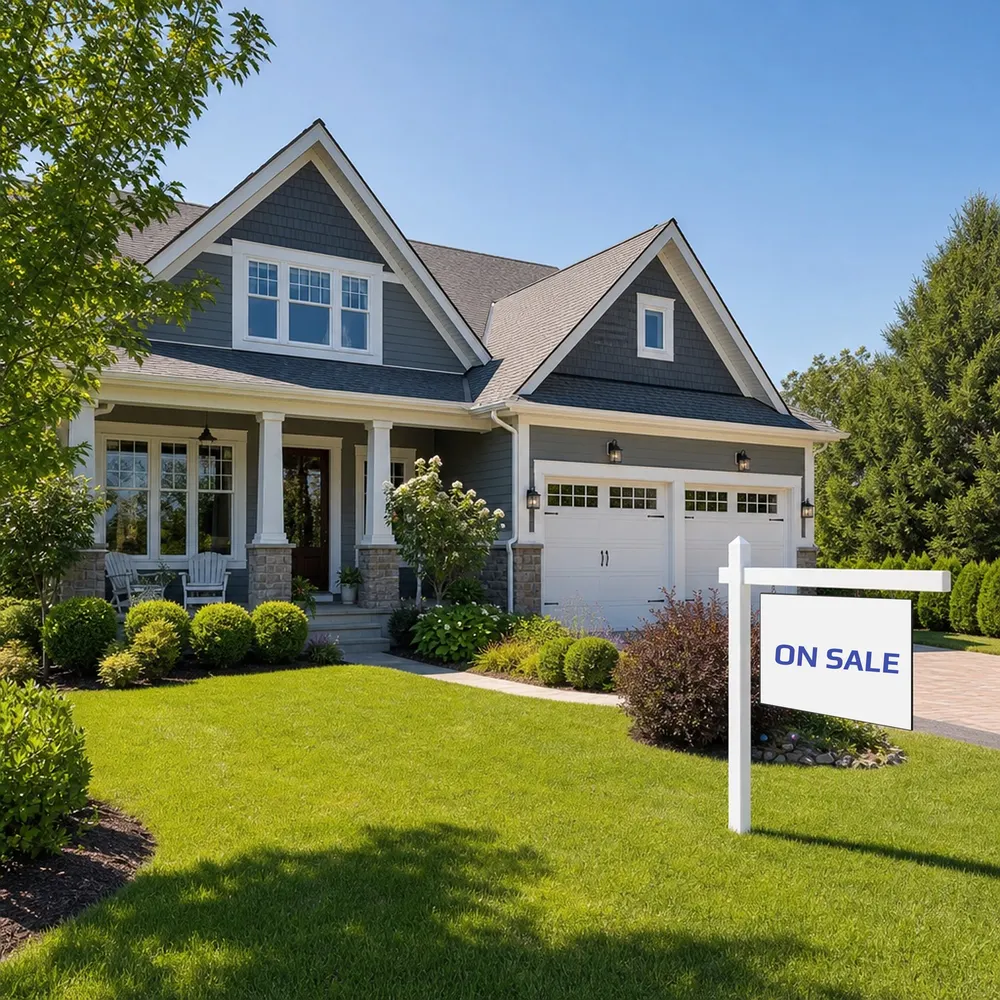
The checklist below maps the highest-impact actions across three timelines — before you list, during your first two weeks on the market, and after 30 days if the listing has stalled.
Before listing your home
Pre-listing work determines 80% of how a home sale plays out in a slow market. Here are steps you can take to sell a house fast in a slow market:
- Run a competitive comp analysis. Pull the last 3 sold comps in your neighborhood — not active listings. Active listings show what sellers hope to get. Sold comps show what buyers actually paid.
- Set the list price at or just below the top comp. Aggressive pricing in the first 14 days produces faster sales and higher net proceeds than chasing the market down with reductions.
- Get a pre-listing inspection. Address the major findings before listing. The inspection cost almost always returns itself in stronger offers and fewer last-minute renegotiations.
- Declutter and pre-pack 30% to 40% of the home. Personal photos, excess furniture, full closets, and counter clutter all make rooms feel smaller in photos and showings.
- Handle cosmetic fixes. Touch up paint, replace dated light fixtures, update cabinet hardware, re-caulk tubs and showers, and pressure-wash exterior surfaces.
- Stage the home before photos are taken. Staged listings consistently outperform unstaged ones in days on market and final sale price. The living room, kitchen, and primary bedroom carry the most weight.
- Hire a professional photographer. Shoot after staging is complete, ideally during late morning or golden hour. Include a video walkthrough and floor plan if your budget allows.
- Confirm showing availability. Open the listing to evening and weekend showings. Restrictive windows are one of the easiest ways to lose serious buyers to easier-to-tour homes.
During the first two weeks
The first 14 days of a listing generate peak attention from buyers, agents, and MLS algorithms. Here's what you need to do in the first 2 weeks:
- Track showing activity daily. Fewer than 3 showings in the first week usually point to a pricing or photo problem — both are fixable before the listing goes stale.
- Host an early open house. Schedule it within the first 7 to 10 days while interest is highest. Weekend open houses generate the most foot traffic and agent referrals.
- Collect showing feedback systematically. Ask your agent to follow up with every showing agent. Patterns in the feedback tell you exactly what's blocking offers.
- Monitor online engagement metrics. Zillow saves, Redfin views, and MLS click-through rates all signal whether the listing is attracting the right audience.
- Respond to every offer professionally — even the lowball ones. Counter-offers keep negotiations alive. Silence ends them.
- Keep the home show-ready every day. Buyers schedule showings on short notice. A messy home loses offers.
If your home is still sitting after 30 days
A listing that goes 30 days without offers has stalled and needs an active reset. Wait too long, and the home becomes "stale" in agent and buyer perception — which only gets harder to reverse.
- Reduce the price meaningfully. A 4% to 6% reduction generates a fresh wave of attention. A 1% to 2% cut barely registers and signals indecision.
- Refresh the listing photos. New photos — even with the same staging — reset the listing in buyer feeds and search results.
- Re-evaluate staging. If feedback points to layout or size concerns, restaging key rooms can shift buyer perception without changing the home.
- Expand marketing reach. Boosted social posts, targeted Facebook ads, and broker email blasts can bring new buyers to a listing that's exhausted its organic audience.
- Consider seller concessions. Rate buydowns, closing cost credits, or repair credits often close deals that price cuts alone cannot.
- Have a candid conversation with your agent. If marketing, pricing strategy, or communication has been weak, this is the moment to recalibrate — not month three.
Frequently asked questions about selling a house fast in a slow market
How long does it take to sell a house in a slow market?
Selling a house in a slow market typically takes 45–90 days from listing to closing, compared to 20–35 days in a seller's market. Homes priced correctly with strong staging and professional photos often sell in 30–45 days.
Overpriced or poorly presented listings can sit for 90–180+ days. Local market conditions, price range, and time of year all influence the timeline significantly.
What is the fastest way to sell a house in a slow market?
The fastest way to sell a house in a slow market is to price slightly below the most recent comparable sales, stage the home before listing photos, and use professional photography.
Cash buyers and iBuyer platforms offer the absolute fastest close — often 7–14 days — but at 75% to 85% of market value. For most sellers, an aggressively priced traditional listing sells faster overall.
Should I stage my home before lowering the price?
Yes, you should usually review staging and presentation before lowering the price, especially if buyers are not connecting with the home online or during showings. Staging can make rooms feel larger, brighter, and easier to understand.
If the home is already well-presented but still getting low activity, then a listing price adjustment may be the stronger move.
Do cash buyers pay less than traditional buyers?
Yes. Cash buyers and iBuyers typically pay 85% to 92% of market value, then deduct 5% to 8% in service fees and additional repair credits after inspection. Final net proceeds usually land at 75% to 85% of what a traditional sale delivers.
The trade-off is speed and certainty — cash sales close in 7–14 days with no financing contingencies, inspections, or showings required.
Is it better to renovate before selling my house?
It is not always better to renovate before selling your house. In a slow market, targeted updates often work better than major renovations. Fresh paint, better lighting, minor repairs, deep cleaning, and simple staging can remove buyer objections without delaying the sale.
Full remodels can cost more than they return, so compare renovation cost against local buyer expectations before committing.
Why is my house not getting offers?
A house not getting offers in a slow market usually points to one of three causes: price (most common), photos, or condition. If showings are happening but offers aren't, the problem is condition, staging, or buyer hesitation about repairs.
However, if showings aren't happening at all, the problem is price or photos. Review showing feedback for patterns to diagnose the exact issue.
How much should I reduce my asking price for my house?
You can reduce your house's price by at least 4% to 6% if your goal is to generate fresh attention after 30 days without offers. Smaller cuts of 1% to 2% barely register in buyer search filters or agent emails.
Cross a meaningful price threshold — for example, dropping from $1,050,000 to $999,000 — to expand the buyer pool searching in that bracket. Anything less rarely produces results.
What is the hardest month to sell a house?
December and January are typically the hardest months to sell a house. Buyer activity drops during the holidays, daylight hours are shorter for showings, and many buyers wait until spring. Homes that do sell in winter often go for slightly less.
The exceptions are warm-weather markets and price ranges driven by relocation buyers, where seasonal effects are weaker.
What are common home selling mistakes?
The most common home selling mistakes include overpricing the home, using phone photos instead of professional photography, skipping staging, refusing to negotiate on early offers, restricting showing availability, and waiting too long to reduce the price after the listing stalls.
Most of these mistakes share one root cause: treating the slow market like a seller's market and reacting too slowly when the listing underperforms.